
How to Accidentally Raise a Landfill Kid
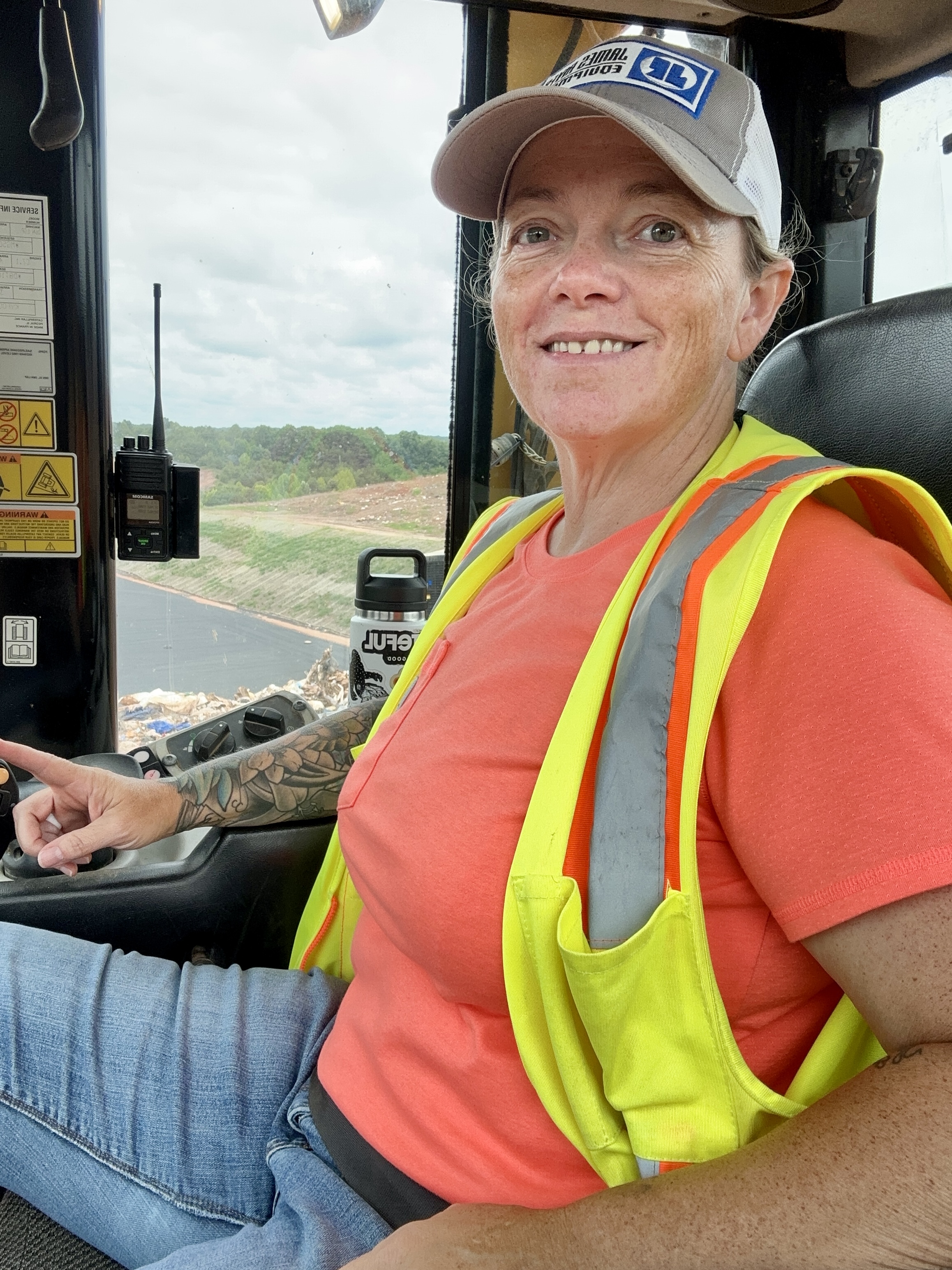

High performers have a funny habit.
We find each other.
Not because we're walking around with some secret handshake or flashing a "Top 1%" badge. We recognize things that never make it onto a résumé, the person who asks one more question, volunteers before they're asked, notices a problem before it becomes everyone else's emergency, or quietly raises the standard without ever announcing they're doing it.
For years, people have asked me whether high performers are born or built.
My answer has always been the same.
Both.
Some people are naturally curious. Some are fiercely competitive. Some seem to have grit installed at the factory. But those traits alone don't create high performers. They have to be challenged, developed, held accountable, and given opportunities to grow. That's where the real work begins.
I was reminded of that recently while thinking about my youngest son.
You see, he got sent home from second grade.
Not for fighting.
Not for talking in class.
Not even for disrespecting a teacher.
He got sent home because he was arguing with the lunch lady.
Before you picture some defiant little kid mouthing off, let me explain.
She was pouring leftover milk into the garbage can.
To everyone else in that cafeteria, it was just a little milk.
To him, it was free liquid entering the waste stream.
At seven years old, he was trying, very passionately, I might add, to explain to adults why liquids shouldn't be dumped into the trash because they create leachate. He wasn't trying to be difficult. He genuinely believed he was helping.
Think about that for a minute.
What second grader is actively concerned about leachate generation?
Most kids are worried about recess, baseball cards, or convincing their parents they absolutely need the newest video game.
Mine was educating school staff on landfill operations.
I'm pretty sure the lunch lady was wondering, "Is this kid seriously explaining garbage to me?"
Meanwhile, I'm getting a phone call from the principal trying to figure out why my second grader felt so strongly about proper waste management, while also asking what leachate was.
I remember hanging up the phone and just laughing.
Is this really freaking happening? Yep. It absolutely was.
The truth is, he didn't become interested in landfills overnight. He grew up in them. He spent countless hours riding through different sites with me, climbing into equipment, watching operators work, and listening to conversations about cell construction, landfill gas migration, leachate, cover soil, permit modifications, and everything else that comes with this industry.
Like most kids, he asked a million questions.
Unlike most kids, those questions were about why a drainage ditch had to be shaped a certain way, why slopes failed, what generated methane, why do the mechanics say nobody can take care of equipment, and why engineers and operators didn't always see the world the same way.
Sometimes I think he asked enough questions to qualify as a random quarterly inspection.
Somewhere along the way, though, something changed.
He stopped simply memorizing facts and started understanding why they mattered.
Looking back, I realize that's exactly how high performers are developed.
They're encouraged to stay curious.
They're allowed to fail.
They're expected to take ownership.
They're held accountable instead of being rescued.
They're surrounded by people who see more in them than they see in themselves.
Someone did that for me long before I had the experience, the confidence, or the titles. He challenged me, invested in me, and expected more from me than I expected from myself. That investment changed the trajectory of my career, and ever since then I've tried to do the same for others.
Over the years I've been fortunate to develop several incredible leaders. Some started as operators. Some came in with very little experience. None of them arrived as finished products. What caught my attention wasn't talent. It was potential. Experienced leaders don't just see who someone is today. We see who they could become.
That's why watching my son has been so rewarding.
He's seventeen now, graduating high school while completing two years of technical education that has introduced him to nearly every discipline of engineering. As an engineer myself, I've loved watching that spark ignite. He doesn't just want to know what works, he wants to understand why it works, where it fails, and how to make it better.
What surprises me even more is that he's just as excited about the operational side.
He loves operating the equipment.
The people.
The challenge.
The constant problem-solving.
He's become passionate about the same thing that has driven me throughout my career: bridging the gap between engineered intent and operational reality.
Because anyone can design something that looks great on paper.
The real question is whether it will actually work onsite.
Can an operator build it?
Will the machines be able to work it?
Will the compactor survive it?
Will it still function after the first three-inch rain while you were at lunch, or will Mother Nature politely review your design, reject your assumptions, and wash half your brand-new haul road into the sediment basin?
That's where engineering stops being theory and becomes reality.
That's where operations and engineering stop competing and start partnering.
Somewhere between accidentally learning what leachate was before he learned long division, spending weekends in landfills, climbing on equipment, hearing me argue with engineers, celebrating permit modification approvals, surviving inspections, and waking up to more 3:30 a.m. phone calls than any emotionally stable person should ever experience... he's somehow decided this looks like a fantastic career choice.
Future Vice President.
Future successor.
Second-generation landfill groupie.
Poor kid.
He still thinks this job is mostly about heavy equipment and packing trash.
I haven't had the heart to tell him that the dozers are the easy part.
Give it a few years...
He'll discover it's actually about people, permits, and trying to explain to someone, for the sixteenth time, that ponding isn't a feature.
What makes me proud isn't the title he hopes to earn someday.
It's the habits he's already building.
I've watched him choose discipline over excuses.
I've watched him stay curious.
I've watched him ask questions instead of pretending to know everything.
I've watched him earn opportunities instead of expecting them.
Those are the things high performers recognize in one another.
Not titles.
Not résumés.
Not experience.
Habits.
Can you build a high performer?
Absolutely.
Can you guarantee the outcome?
Not a chance.
The raw material still has to choose growth.
As leaders, our responsibility isn't to manufacture greatness. It's to recognize potential before it's obvious, raise the standard, tell the truth, create opportunities, and refuse to let people settle for less than they're capable of becoming.
Perhaps our greatest responsibility isn't building the business at all.
It's building the people who will one day lead it without us. That's succession.
Not replacing yourself. Multiplying yourself.
Leaving behind people who think better, lead better, and solve problems better than you ever could.
I've been fortunate enough to have mentors who invested in me before I earned the spotlight, and equally fortunate to invest in others who have gone on to become exceptional leaders themselves.
Now I get to watch the next generation begin that same journey.
So, here's my challenge to every leader.
Stop looking only for experience.
Start looking for potential.
Find the ones who ask the extra question.
The ones who quietly improve every week.
The ones who want to understand the why, not just the what.
Invest in them.
Challenge them.
Raise the standard.
One day they'll be the ones answering the 3:30 a.m. phone call.
And if we've done our jobs well, they'll already be looking for the next high performer to hand that phone to.
That's how companies survive.
That's how industries evolve.
That's how legacies are built.
And every once in a while...
...that's also how you end up with a second grader getting sent home because he was trying to prevent leachate generation in the school cafeteria.
Most parents got calls because their kids started fights.
I got one because mine was trying to enforce solid waste best practices at lunch.
I probably should have seen that coming.


Comments